Dit artikel is nog niet beschikbaar in het Nederlands, dus hier is het Engelse origineel.
Stasher bags turn up in every zero-waste starter list, and they are one of the few reusables where the long-term buyer reviews are worth far more than the listing copy. This one was checked against the real listing and against what people report after months of packed lunches, frozen soup and microwaved leftovers. Nobody here bought a set and nobody cooked with one.
The good
Stasher bags are 100% platinum silicone, rated for the oven (up to 400°F), the microwave, the dishwasher and the freezer. The consistent line in reviews written a year or more after purchase is that the bags still look close to new, and that the pinch-seal is genuinely airtight once the technique clicks. Leaks are rare in those reviews, tomato-based sauces included, and where they do show up it is almost always a bag filled past the seal line.
The learning curve
The pinch-seal takes a few tries. First-week reviews are full of people second-guessing whether the thing is actually closed; month-three reviews barely mention it, so the muscle memory arrives fast. These are also not sticky the way zip-top plastic is. They do not cling to themselves, so closing one has to be deliberate rather than automatic.
Cleaning and odour
The most common complaint by a wide margin: silicone holds onto smells, and holds onto water in the corners. Buyers who air-dry the bags upside down, or prop them open with a wooden spoon, report no trouble. The ones who stack them still damp report exactly the stale smell everyone warns about. The dishwasher handles them, top rack only.
Value calculation
A set of four Stasher Stand-Up bags (half-gallon) runs about $36 on Amazon. Zip-top bags cost roughly $0.10 per use, so the set has to replace 360 of them before it is paid off. At two or three bags a week that takes two to three and a half years, saving $10 to $16 a year. At a bag a day it takes about a year, and saves about $36 a year after that.
Who should buy these
If disposable bags are a daily habit, the maths is clear. At a few a week the payback is slow, so the set has to last two to three and a half years to come out ahead, which the long-term reviews suggest it does. If they come out twice a year, the upfront cost is much harder to justify, and a jar does most of the same jobs for nothing.
Bottom line
Worth the upfront cost if you use a zip-top bag a day: it pays off in about a year and saves about $36 a year after that. At two or three bags a week it takes two to three and a half years. The durability and the temperature range are what keep these in people's kitchens years later. Just dry them properly, which is the one thing the unhappy reviews all have in common.
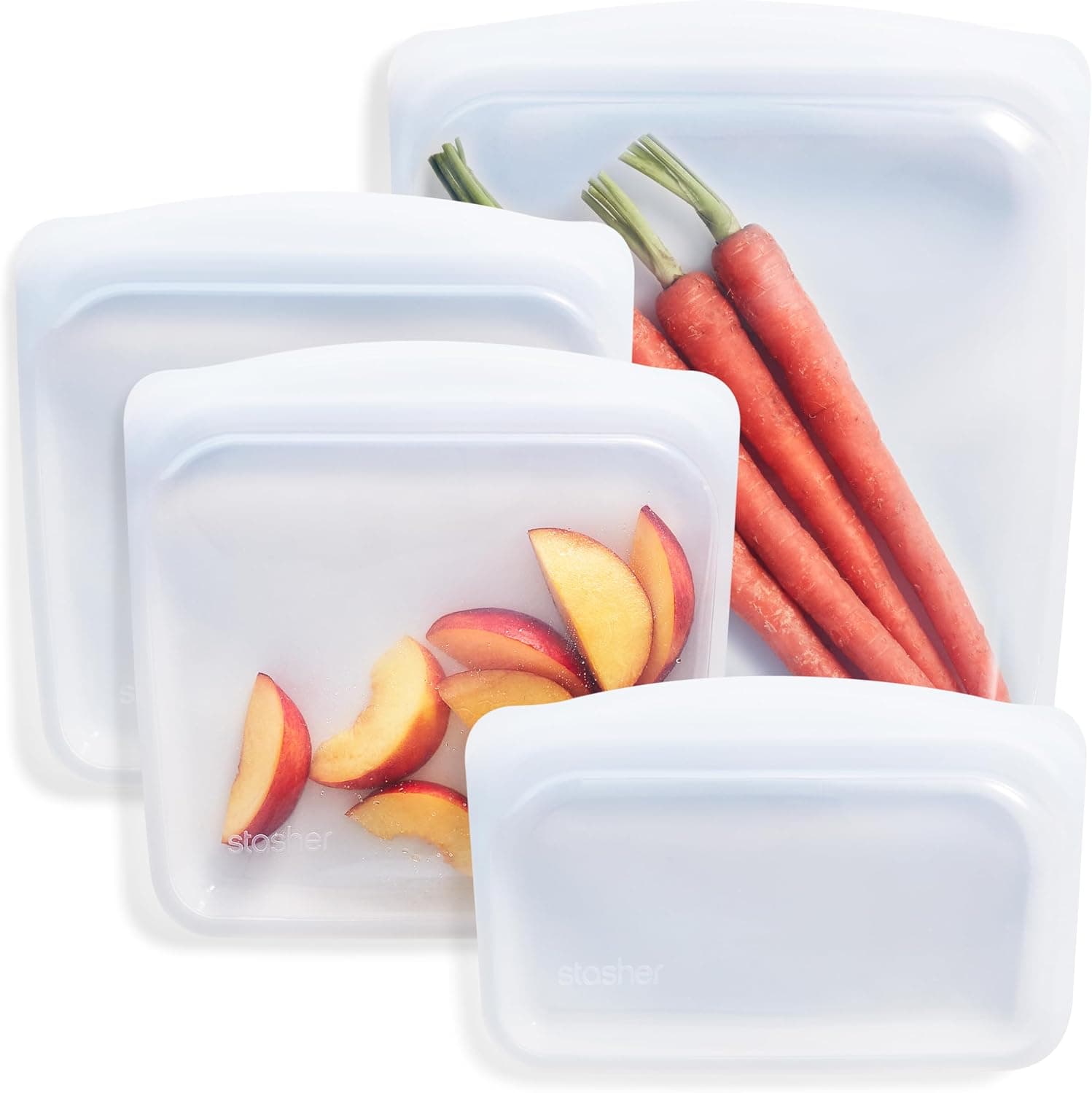
What is in the box: four Stasher Stand-Up bags in two sizes (half-gallon and quart), each with a round base that stands upright, so they do not slump over on the counter.
Haal Stasher silicone bags, set of 4 in huis
Advertentie, affiliatelink: wij ontvangen een commissie, jouw prijs blijft hetzelfde.
Shop bij AmazonVond je dit wat? Er zijn nog 10 swaps.
De gratis checklist dekt keuken, badkamer en boodschappen. Elke swap net zo grondig onderzocht als deze.