Diesen Artikel gibt es noch nicht auf Deutsch, deshalb hier das englische Original.
The bamboo toothbrush is the swap almost everyone starts with, which also means the listings are full of near-identical brushes and the buyer reviews are the only way to tell them apart. This one was checked the way everything here is: the real listing, the stated specs, and what people say after living with it for a few months. Nobody here bought it and nobody brushed with it. No sponsored content, no brand deals.
What turns up in the box
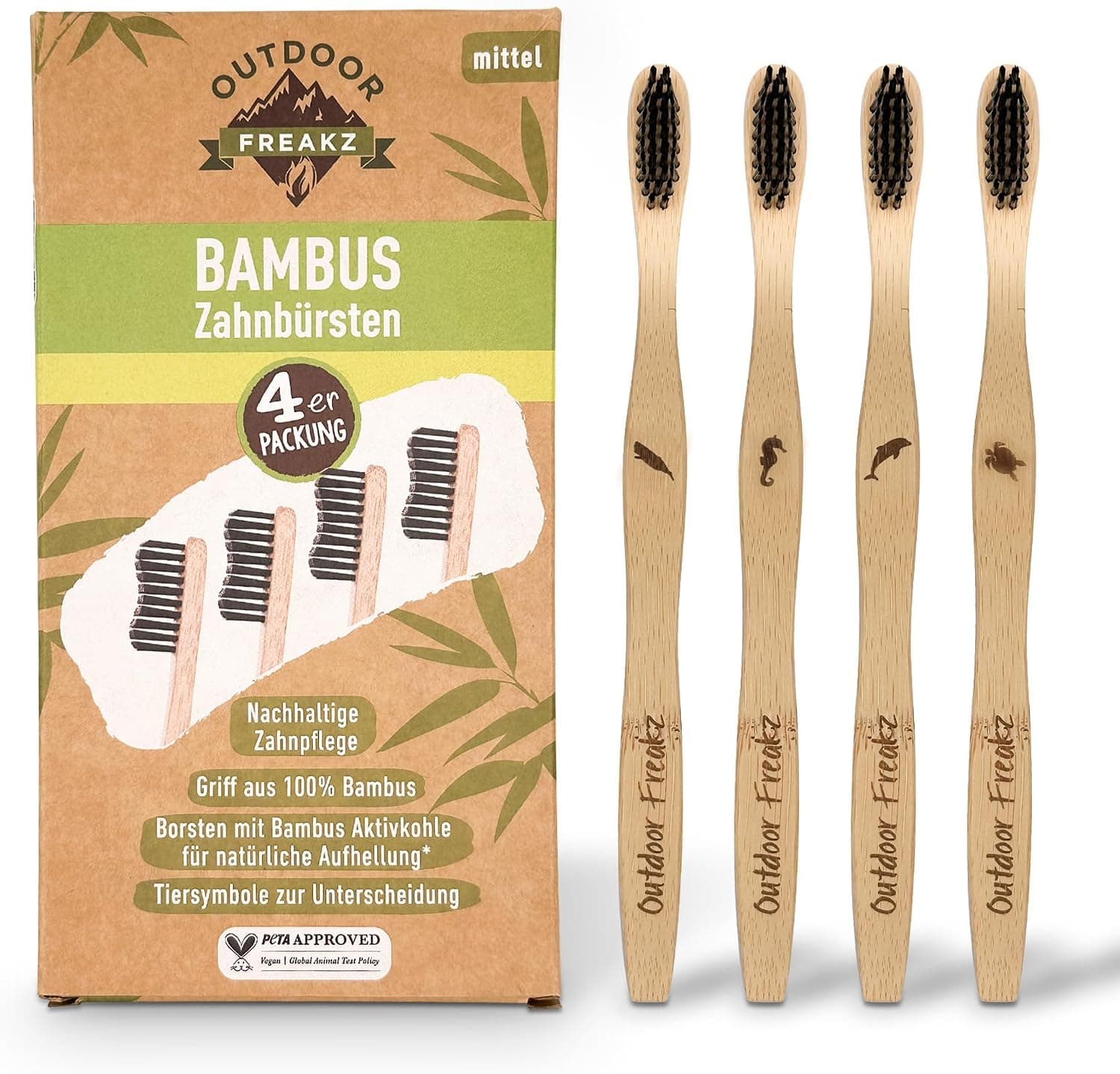
Reviewers describe a small cardboard box with no plastic in it, which is the whole point of buying one of these. The handle is untreated bamboo, noticeably lighter than a moulded plastic brush and a little rougher in the hand. The recurring gripe is that a flat handle does not sit in a cup as neatly as a contoured one, and that a wet handle left in a puddle will darken over time.
Bristles, the part that matters
The question every long-term review eventually answers: do the bristles hold up? The pattern across them is that the bristles flatten somewhat by month two but do not shed or fray, and most buyers replace at the usual three-month mark rather than early. The complaints that do come up are about firmness. Several reviewers found them harder than the soft brush they were used to, so anyone brushing on a dentist's instructions should check the stated bristle grade before ordering.
The bristles are a bamboo-charcoal nylon blend, and the listing claims that reduces bacteria. That is a manufacturer claim, not something a buyer review can confirm, so treat it as marketing until there is a study behind it. What reviewers do report is no stale smell after a couple of months, which is more than several plastic brushes manage.
The handle's afterlife
This is where bamboo brushes either win or lose. The handle is compostable: roughly six months in an industrial facility, closer to a year in a home heap or a garden bed. The bristles are nylon, are not biodegradable, and have to be pulled out with pliers before the handle goes anywhere near compost. The handle is about 60% of the product by weight, so most of the brush really does go back to soil, but the "fully compostable" framing some listings use is not accurate.
Price check: the budget reality
The listing works out at about $3.49 per brush. A supermarket four-pack of plastic brushes runs around $2.99, so roughly $0.75 each. The bamboo version costs about 4.5 times more per unit.
Worth it? For one person, $3.49 every three months is about $14 a year, which is one month of a streaming subscription. For a family of five replacing on the same schedule, the gap is real and worth planning around before committing to it as the household default.
The flavour situation
No flavour options, and most multipacks arrive with no colour coding either. If several people in one bathroom are using them, the trick reviewers keep repeating is a dab of nail polish on the handle end.
The verdict
Good swap for the planet, fair swap for your wallet. The bristles go close to three months, the handle composts, and by every account the actual brushing is unremarkable, which for a toothbrush is exactly the point. It is not revolutionary. It is a toothbrush that wrecks the planet a bit less, and that is enough.
Who this is for: beginners, bathroom minimalists, people who want to start somewhere without overhauling everything. Who this is not for: anyone who needs a specific soft bristle grade, or is buying for several people on a tight budget.
One more thing the reviews agree on: when the brush is spent, pull the bristles out and bin them, then compost the handle. The small act of caring about where things go. Not perfection. Just better.
Hol dir Brush Buddies bamboo toothbrush
Anzeige, Affiliate-Link: Wir bekommen eine Provision, dein Preis bleibt gleich.
Bei Amazon kaufenHat's dir gefallen? Da warten noch 10 Alternativen.
Die Gratis-Checkliste deckt Küche, Bad und Einkauf ab. Jede Alternative so recherchiert wie diese hier.