Your Banana Peel Isn't Composting in That Landfill. It's Making Methane.
Tossed food doesn't quietly rot away, it becomes a major methane source, and the fix isn't what most "zero waste" advice tells you.
I used to feel a little smug scraping plate scraps into the trash. Not great, sure, but "food is biodegradable" felt like a get-out-of-guilt-free card compared to, say, a plastic clamshell. It'll break down. Nature's way. No harm done.
Turns out that logic is backwards, and the actual science is worse than the vague "waste is bad" story most of us grew up with.
The methane math nobody explains
When food waste ends up in a landfill, it gets buried under layers of other trash and breaks down without oxygen. That anaerobic process produces methane, and methane is a much nastier greenhouse gas than the carbon dioxide people usually worry about. A compost pile in your backyard, exposed to air, mostly turns into CO2 and dirt. A banana peel crushed under forty feet of garbage does something chemically different, and that difference matters a lot for the atmosphere.
Here's the number that reframes the whole issue: food waste makes up roughly a quarter of what goes into U.S. landfills, but according to the EPA's first-ever attempt to quantify this specifically, it's responsible for 58 percent of the fugitive methane escaping those landfills into the air. It is, in the report's own words, a source with an outsized impact relative to its share of the trash.
Why so disproportionate? Because food breaks down fast. The EPA found that half of the methane produced by landfilled food waste is released within about three and a half years of it going into the ground. Landfill gas capture systems, the pipes and wells that grab methane and burn it off or turn it into energy, often aren't even installed yet by the time that early burst happens, or they're not efficient enough to catch it. An estimated 61 percent of the methane generated by landfilled food waste escapes straight to the atmosphere uncaptured. Slow-decaying stuff like plastic or even other organic waste gives those systems time to ramp up. Food doesn't wait around.
And methane itself is a sprinter, not a marathoner, as greenhouse gases go. It traps far more heat than carbon dioxide over a shorter window, which is exactly why cutting it now has an outsized near-term cooling effect. That's the good news buried in the bad news: reducing food waste is one of the faster climate levers we actually have.
Wait, so is composting the answer?
Here's where it gets less tidy than the usual advice. Composting at home, or through a curbside organics program, absolutely produces less methane than landfilling, because it happens with oxygen. But a 2025 study looking at real curbside organics programs found something uncomfortable: the cost per household of running these programs was often several times higher than the actual climate benefit, especially in places where the local landfill already has a solid gas-capture system installed. In other words, once your city's landfill is well-managed, hauling your food scraps to a separate composting facility might not be the slam-dunk climate win it's marketed as. It's still good for soil, still keeps material productive, just don't assume the bin alone is fixing methane emissions on its own.
Which brings us to the boring but correct answer: the biggest climate win isn't diverting food waste after the fact, it's not generating the waste to begin with. The EPA's own hierarchy puts prevention above every downstream option, composting included.
What actually moves the needle in a normal kitchen
None of this requires a lifestyle overhaul. It's mostly logistics. Buy with a plan instead of vibes, and check what's already in the fridge before adding to the pile. Use a first in, first out system, oldest stuff toward the front, new stuff pushed to the back, so nothing goes feral in the crisper drawer. Freeze things at their peak instead of waiting for the "should I eat this" panic. And take the "best by" date with a grain of salt, since it's a manufacturer's quality guess, not a safety deadline, and plenty of food is fine well past it.
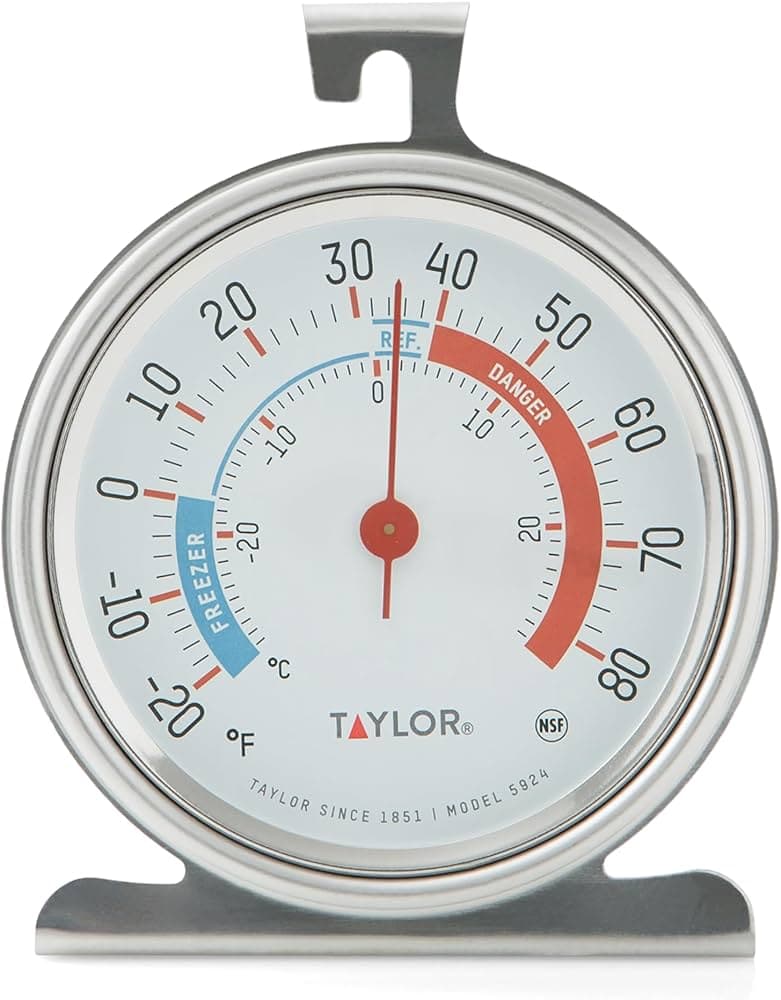
One cheap, unglamorous tool actually helps more than people expect: a fridge thermometer. A surprising amount of household spoilage comes down to a fridge running warmer than you think, which shortens shelf life across the board without you noticing until things go slimy early. Something like the Taylor 5924 large dial fridge and freezer thermometer costs about the price of a sandwich and takes the guessing out of "is my fridge actually 37 degrees or is it more like 45."
If you do want to compost, do it, it's still better than the trash can and your tomatoes will thank you. Just don't let a composting bin become the reason you stop paying attention to how much you're buying in the first place. The real prize was never in the bin. It was in not filling it.
The bottom line
Food waste rotting in a landfill isn't a harmless, natural process, it's a fast, disproportionate source of one of the most potent greenhouse gases we produce. Composting helps, but the honest fix is buying and storing food so less of it needs a bin at all.
Get the Taylor 5924 Large Dial Kitchen Refrigerator and Freezer Analog Thermometer
Ad, affiliate link: we earn a commission when you buy through this link. The price stays the same for you.
Shop on AmazonLiked this? There are 10 more swaps.
The free checklist covers kitchen, bathroom, and shopping. Every swap researched like this one.