Wishcycling: Why Tossing "Maybe Recyclable" Stuff in the Bin Backfires
That hopeful toss of a greasy pizza box into the recycling bin isn't harmless, it's actually making your whole bin less likely to get recycled.
I used to think of my recycling bin as a second chance machine. Unsure if something could be recycled? In it went, because surely someone at the facility would sort it out, right? Wrong, and I mean confidently, expensively wrong. Turns out there's a name for this exact behavior, and it's not flattering: wishcycling.
Wishcycling is basically what it sounds like. It's putting something in the recycling bin because you hope it can be recycled, not because you actually know it can. A Collins English Dictionary definition sums it up as putting something in a bin "without being certain that it is actually recyclable." It feels responsible in the moment. It is, according to pretty much everyone who studies waste for a living, one of the biggest problems in the entire recycling system.
The numbers are worse than you'd guess
Here's where it gets uncomfortable. Estimates on US recycling contamination, meaning the percentage of stuff in bins that shouldn't be there, land around 25 percent, roughly one in four items you toss in isn't actually recyclable where you live. Some cities see contamination rates of 40 percent or higher. And this isn't a static problem either, contamination rates were around 7 percent a decade ago and have climbed steadily since, with wishcycling named as a key driver of that rise.
Why does this matter so much? Because recycling doesn't work item by item, it works batch by batch. When a truck full of your neighborhood's bins arrives at a material recovery facility, non-recyclable junk mixed in with the good stuff can contaminate the whole load. A greasy pizza box, a plastic bag, a garden hose, all of it can gum up sorting machinery designed for clean paper, metal, and rigid plastics. When contamination gets bad enough, workers spend extra time and labor sorting it out, which raises costs, and sometimes facilities just give up and send the entire batch to a landfill instead. Your good intentions and your neighbor's actual recyclable milk jugs go down together.
It's not really your fault, though
Before you spiral into guilt, know this: waste experts are pretty clear that wishcycling comes from confusion, not carelessness. Orange County's Solid Waste Division Manager put it simply, people care and want to recycle, but there's often a lack of understanding about what's actually accepted. Part of the blame goes to decades of vague "chasing arrows" symbols on plastic that made everything look recyclable even when local facilities couldn't process most of it. Part of it is that recycling rules are wildly inconsistent, what your city accepts can be totally different from the next town over, so nobody can really be blamed for guessing wrong.
There's also a psychological trap here. Most of us have been told since elementary school that recycling is the responsible, planet-loving choice, so throwing something "away" feels like failure. Tossing it in the recycling bin instead feels like a small win, even when we're not sure it belongs there. That hopeful shrug and toss is wishcycling in its purest form, and it's remarkably common, even among people who genuinely care about doing this right.
The fix isn't complicated, but it does require breaking a habit. The waste industry's actual mantra, the one recycling coordinators repeat constantly, is "when in doubt, throw it out." That sounds counterintuitive if you grew up believing recycling more is always better, but it's the opposite of true. A single contaminated batch helps no one, while a smaller, cleaner batch of genuinely recyclable material actually gets processed and turned into something new.
Practically, that means checking your specific municipality's list instead of assuming, since accepted materials vary by city and even by neighborhood. It means keeping greasy or food-soiled cardboard and shredded paper out of the bin, since even legitimate paper recyclables get downgraded when contaminated by oil or crumbs. And it means never putting plastic bags or film in your curbside bin, they're one of the most common and most damaging wishcycled items because they tangle sorting equipment, even though most grocery stores will take them back for separate recycling.
What actually helps at home
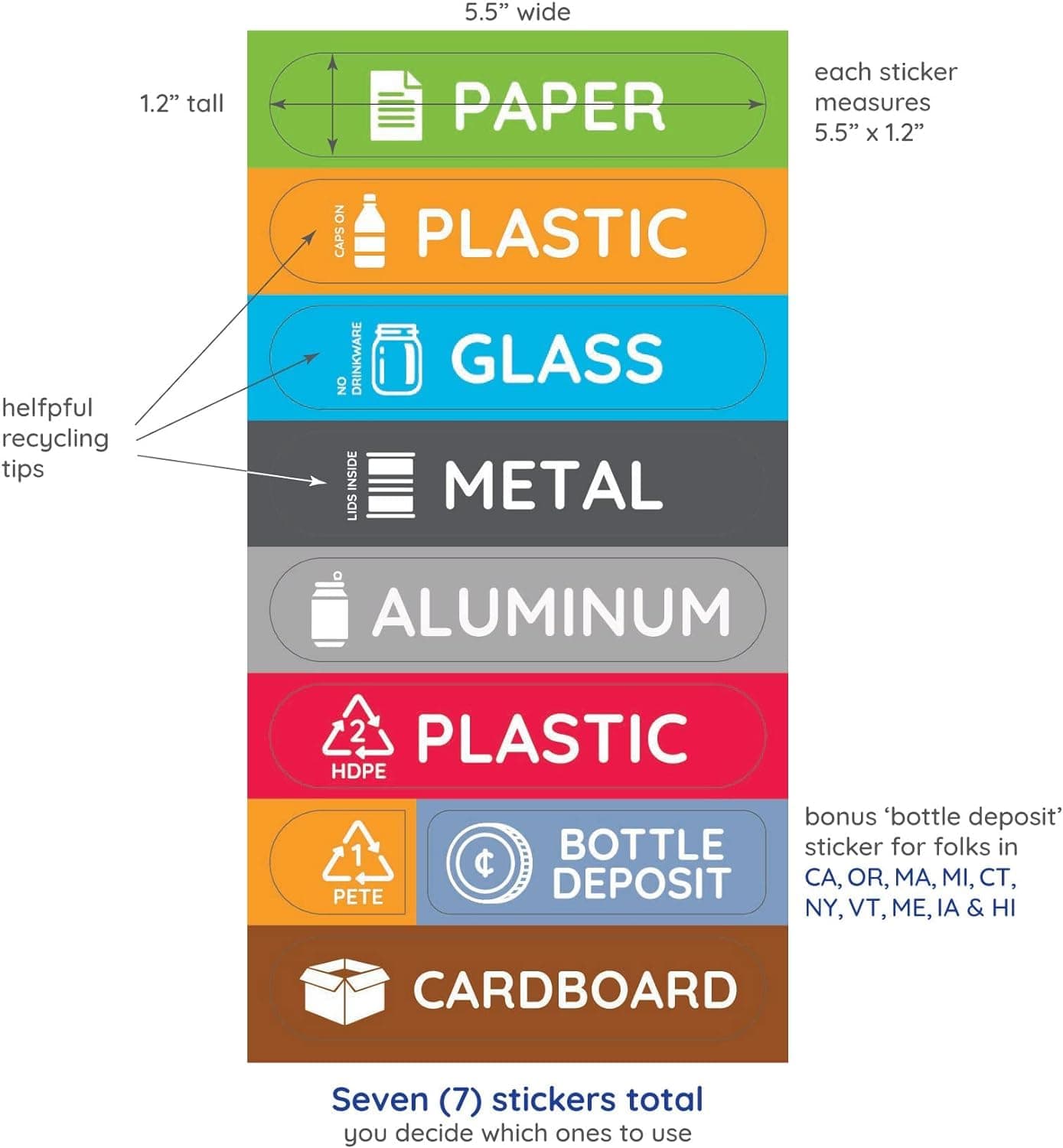
If your household recycling routine is mostly vibes, a simple fix is putting clear labels on your bins so everyone in the house or office is sorting the same way, instead of guessing differently each time. A basic sticker set that spells out what goes where removes the ambiguity that leads to wishcycling in the first place, since a lot of contamination happens simply because people aren't sure which bin is for what. It's a five dollar fix for a genuinely expensive problem.
The honest, unsatisfying truth about wishcycling is that doing less feels like doing worse, even though it's the opposite. Recycling isn't a wish, it's a supply chain, and supply chains need clean inputs to work. So next time you're standing over the bin holding something questionable, the kindest thing you can do for the actual recyclables in there is let that one item go to the trash. It's not glamorous, but it's real sustainability, not the feel-good kind, the kind that actually works.
Get the Recycling Rules Recycling Bin Sticker Set
Ad, affiliate link: we earn a commission when you buy through this link. The price stays the same for you.
Shop on AmazonLiked this? There are 10 more swaps.
The free checklist covers kitchen, bathroom, and shopping. Every swap researched like this one.