The Reusable Tote Bag Break-Even Point: How Many Uses Before It Actually Beats Plastic
That drawer full of tote bags might be doing less for the planet than you think, here's the real math on when reusable bags actually pay off.
I have a drawer. You probably have one too. It's stuffed with tote bags from farmers markets, conference swag, that one bookstore that closed in 2019, and at least three bags from grocery chains you don't even use anymore. Every single one of them was acquired under the assumption that it was the responsible choice. Plastic bad, tote good, done.
Except it turns out the math is a lot weirder than that, and if you've got a drawer like mine, you're probably sitting on an environmental liability rather than an asset.
The study that ruined everyone's grocery run
In 2018, the Danish Environmental Protection Agency published a life cycle assessment of grocery carrier bags that looked at everything from climate impact to water use to ozone depletion. The headline number that went viral was staggering: a conventional cotton tote needs to be reused 7,100 times to match the environmental impact of a single-use plastic bag, and organic cotton needs a jaw-dropping 20,000 uses. That's not a typo. Twenty thousand.
Cue a thousand smug articles about how your reusable bag habit was secretly destroying the planet. Except that number is doing something sneaky. It's an average across fifteen different impact categories, and one category in particular, ozone depletion, is dragging the whole figure into absurd territory. A researcher who dug into the methodology found that if you strip out that one category, the range for conventional cotton drops to somewhere between 50 and 1,400 uses, and for organic cotton it's more like 150 to 3,800.
The number that actually matters for most of us
Here's the figure that's genuinely useful, if you're only worried about climate impact, which is the concern most people have in mind when they reach for a tote instead of a plastic bag: a conventional cotton bag breaks even on carbon emissions after about 52 uses, according to that same Danish study, a number that lines up with earlier UK Environment Agency research putting cotton totes at roughly 131 uses when you look at overall climate impact. Organic cotton needs more, somewhere around 149 uses for that narrower climate measure, because organic cotton farming has lower yields per acre even though it uses less pesticide.
Use a cotton tote once a week and you clear the 52 use threshold in exactly one year. Clear the 131 use threshold in about two and a half years. Either way, that's genuinely doable for a bag that's sitting in your car right now, assuming you actually use the same one over and over instead of grabbing a fresh one every time you forget.
Not all reusable bags are created equal
This is where material matters more than people expect. Non-woven polypropylene bags, the slightly stiff, laminated ones a lot of grocery chains sell at checkout, break even far faster than cotton. Some research puts the number as low as 11 uses to match plastic's climate impact, and other studies show they cut emissions by roughly 85 percent after about 50 uses. They're made from plastic too, just a thicker, more durable kind, so the production footprint per bag is smaller from the start.
Cotton, on the other hand, is thirsty. Growing and processing cotton takes enormous amounts of water and energy, which is exactly why a cotton tote has to work so much harder before it earns its keep. That doesn't mean cotton is a bad choice, it means cotton is a slow-burn investment that only pays off if you're actually loyal to the bag.
The real problem isn't the math, it's the drawer
Here's the part the viral headlines missed. The break-even calculation assumes you use one bag, over and over, for years. It completely falls apart if your actual behavior is "accumulate totes faster than you wear them out." A bag that gets used four times before being shoved in a drawer in favor of a newer, cuter one is worse for the planet than the plastic bag it was supposed to replace, full stop. The bag itself was never the problem. The impulse to collect a new one every time someone hands you one for free is the problem.
There's also a wrinkle nobody puts on the tote bag marketing: plastic bags aren't purely villains in this comparison either. A lot of the older studies assumed the plastic bag gets used exactly once, but if you reuse a plastic bag as a trash liner or a second grocery run before tossing it, its environmental cost drops too, and the number of totes needed to beat it rises accordingly. The honest takeaway is less "plastic bags are secretly fine" and more "single use anything is the actual enemy, regardless of material."
What to actually do about it
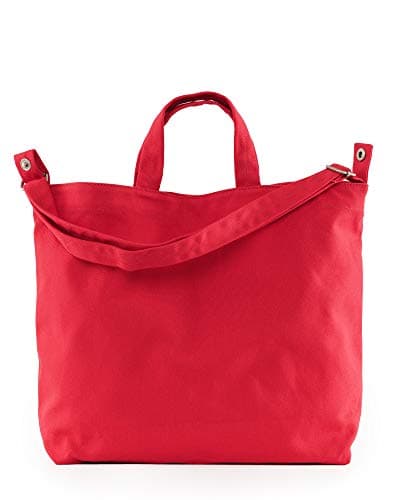
Don't buy a new tote. Use the ones you already have until they fall apart, and let that decide which material wins. If you genuinely need to add one to the rotation, because the drawer situation has actually resulted in zero functional bags, look for something built to survive a hundred plus trips rather than something cute that'll fray at the seams by month three. The BAGGU Canvas Reusable Retail Tote is a solid pick here, it's made from cotton canvas that's 65 percent recycled, constructed from a single piece of fabric to cut down on waste and stitching that fails, and it's fully machine washable so you're not tempted to retire it just because it picked up a coffee stain. A sturdy, boring, reliable bag that you actually grab every time beats a stack of pretty ones you forget about.
The uncomfortable truth in all this LCA data is that sustainability was never really about which material you buy. It's about whether you keep using what you've already got. So skip the new tote, dig the ugliest, sturdiest bag out of your existing pile, and let it earn its 52 uses. Your car trunk will thank you, and so, eventually, will the planet.
Get the BAGGU Canvas Reusable Retail Tote
Ad, affiliate link: we earn a commission when you buy through this link. The price stays the same for you.
Shop on AmazonLiked this? There are 10 more swaps.
The free checklist covers kitchen, bathroom, and shopping. Every swap researched like this one.