The Donation Bin Isn't the Eco Win You Think It Is
You drop the bag, feel virtuous, and drive off. Here's the less flattering truth about where that sweater actually ends up.
There's a specific little dopamine hit that comes from stuffing a garbage bag of old clothes into a donation bin. It's the closet-cleaning equivalent of paying off a debt. You picture some grateful stranger wearing your barely-worn cardigan, and you drive away lighter, morally and literally. I've done it more times than I can count. Turns out that warm feeling is doing a lot more work than the actual system behind it.
The math doesn't add up
Here's the uncomfortable part. Multiple sources tracking the used clothing supply chain, including the Council for Textile Recycling, put the number of donated clothes that actually get sold in local thrift stores at only 10 to 20 percent. Goodwill itself has told reporters that only about half of what it receives is suitable for its traditional retail stores and ecommerce. So even the most generous estimate means roughly half your donated stuff never sees a store rack in your community at all. It's not that thrift stores are lazy or ungrateful. There is genuinely more clothing arriving than there is retail space, staff, or local demand to absorb it.
Where the rest actually goes
What doesn't sell gets sorted again. The best of what's left gets baled into roughly half-ton compressed cubes and sold by weight to recyclers and export brokers. That's the fate the industry doesn't put on the donation bin signage. The EPA has reported that in a single recent year, 11.3 million tons of textile waste were landfilled and 3.2 million tons were incinerated in the U.S., with only around 14.7 percent of textile waste actually recycled. Some estimates break it down further: about 700,000 tons exported overseas and 2.5 million tons recycled domestically, against 3 million tons incinerated and 11 million tons landfilled. None of those numbers describe a sweater finding a grateful new owner.
The Kantamanto problem
A huge share of what gets exported ends up in massive secondhand markets abroad, the biggest being Kantamanto in Accra, Ghana, where an estimated 15 million garments arrive every single week. The Or Foundation, an NGO working in the market, has said that around 40 percent of each bale arrives already unsellable, essentially born as waste, and ends up dumped in landfills, burned, or washed into the ocean along Accra's beaches. To be fair, this number is disputed. A 2024 report from the Ghana Used Clothing Dealers Association argued the real waste figure is closer to 5 percent, and even the Or Foundation's own earlier study found only about 4 percent of an incoming bale is waste on arrival, with the 40 percent figure describing what vendors can't resell later. Either way, everyone involved agrees the volume is overwhelming local infrastructure built for a fraction of the load, and Ghana's own landfill has exploded under the weight of it before.
Recycling isn't the safety net people assume
It's tempting to think, well, if it can't be resold or worn, at least it gets recycled into something. Mostly, it doesn't. Most modern clothing is made of blended fibers like cotton-polyester or anything with elastane, and those blends are extremely difficult to separate with current recycling technology. Cotton needs mechanical recycling that weakens the fiber, polyester needs chemical recycling that's expensive and limited in scale, and stretch fabrics are close to impossible to process at all. The result is that globally, less than 1 percent of clothing gets recycled into new garments. Most "recycled" textile ends up downcycled once, into rags, insulation, or furniture stuffing, which is a fine outcome but not the closed loop people picture when they hear the word recycling.
The bin itself might not even be a charity
One more wrinkle worth knowing. Not every donation bin on the side of the road belongs to an actual nonprofit. Some are run by for-profit textile-recycling companies that print their real company name in tiny type, relying on people assuming it's a charity drop-off. Connecticut got fed up enough with this to start issuing $500 fines to owners of bins that pose as charity collection points. It's worth checking who actually operates the bin before you unload your bags into it.
So what's actually worth doing
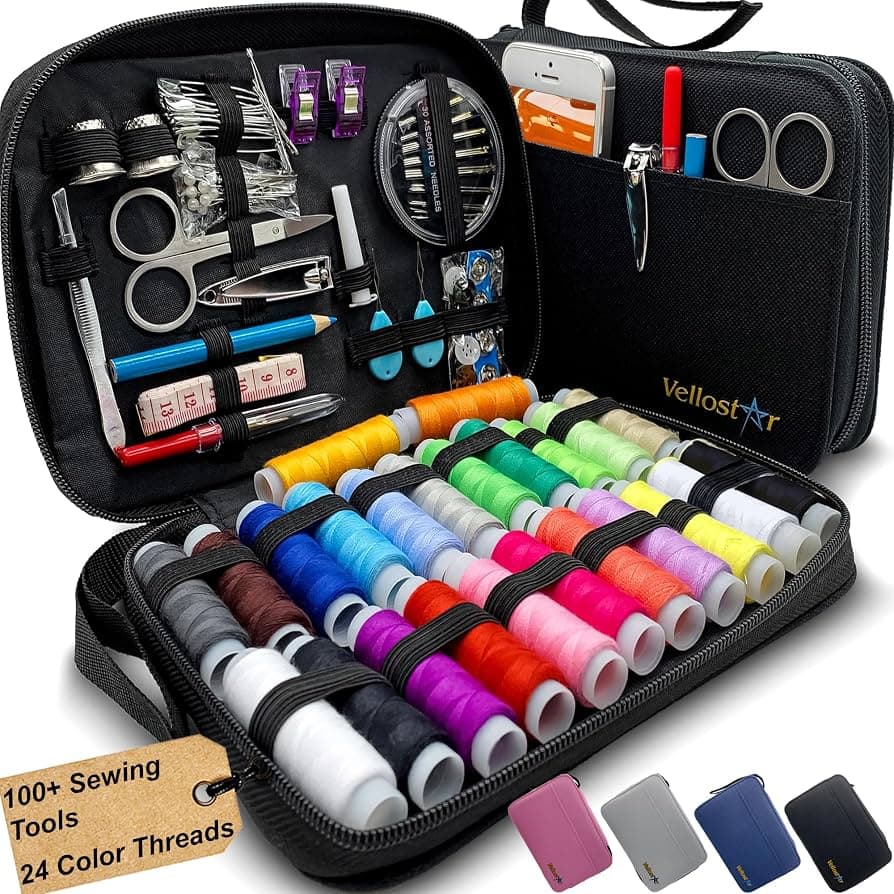
None of this means donating is pointless, it's genuinely better than the trash, and legitimate thrift stores and nonprofits do real good with what they can use. But if the goal is actual environmental impact rather than a feel-good errand, the order of operations should flip. Repair first, since a broken zipper or missing button shouldn't retire a whole garment. A basic mending kit, something like the Vellostar sewing kit with needles, thread, and a seam ripper, costs less than a lunch out and can add years to clothes you already own. Sell or swap directly through resale apps or local swap groups so the garment goes straight to someone who wants it, no export bale required. And when you do donate, call ahead or check the list of specific items a charity actually needs, coats, suits, prom dresses, rather than assuming everything is equally welcome.
The honest recommendation here isn't to feel guilty about the donation bin. It's to stop treating it as the finish line. It's step one of a supply chain that's currently drowning in volume, and the most sustainable move is still the boring one: buy less, buy stuff that lasts, and fix what you've got before you let it go.
Get the Vellostar Sewing Kit for Adults & Beginners
Ad, affiliate link: we earn a commission when you buy through this link. The price stays the same for you.
Shop on AmazonLiked this? There are 10 more swaps.
The free checklist covers kitchen, bathroom, and shopping. Every swap researched like this one.