Swedish Dishcloths vs Paper Towels: Do They Really Save You Money?
One weird cloth claims to replace 17 rolls of paper towels. I ran the actual math on cost, mess, and whether it's worth the hype.
I resisted the Swedish dishcloth thing for a long time because it had that specific energy of "this one product will change your life" that usually means someone's selling something. But my paper towel spending had genuinely gotten embarrassing, so I decided to actually do the math instead of just vibing about it.
Here's the baseline. The average American household spends over $100 a year on paper towels. That number is easy to undercount too, because most of us buy the giant Costco pack and don't think about it again until it's gone, which is exactly how you lose track of what something costs you.
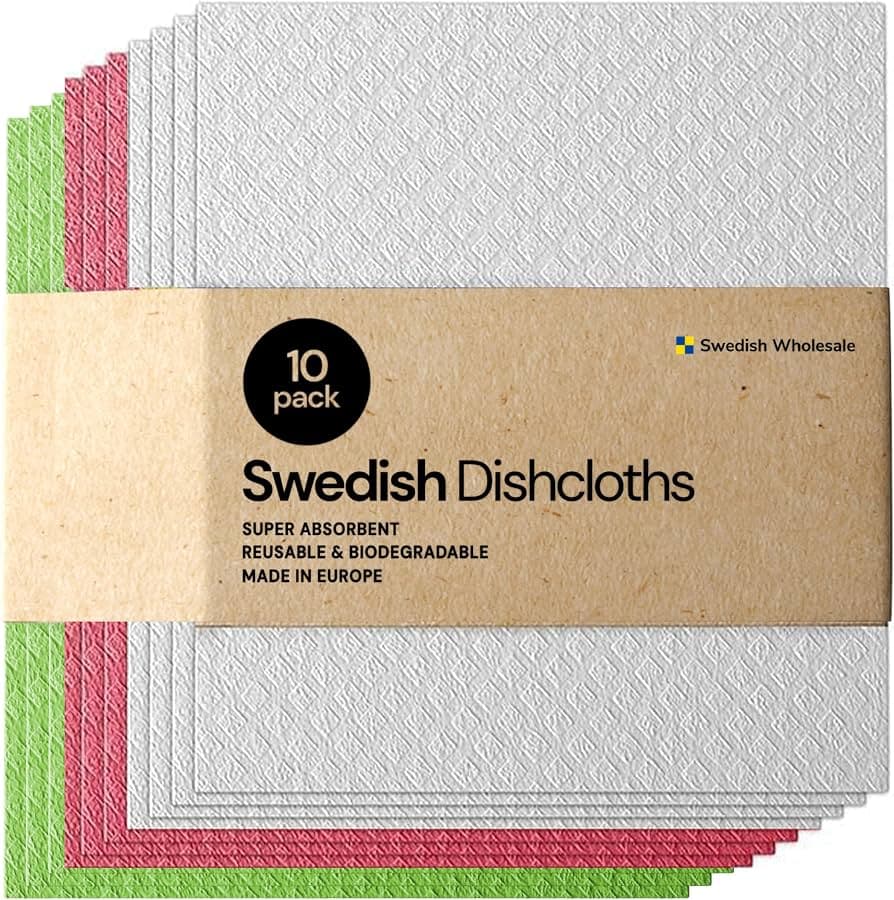
Swedish dishcloths are those flat, slightly stiff squares made from a cellulose and cotton blend, usually around 70/30. They're stiff out of the package, go soft and spongy when wet, and are basically what happens when a sponge and a dish towel have a very Scandinavian baby. The pitch is that one cloth can replace a huge number of paper towel rolls over its life. A pack of 10 Swedish Wholesale dishcloths runs about 20 dollars, and each one is rated to last 9 to 12 months with normal use and washing. Do the math on that and a $20 pack is standing in for what would otherwise be a year or more of paper towel purchases, and the math genuinely works out in the cloth's favor.
The absorbency claim isn't just marketing copy either. These cloths can soak up something like 15 to 20 times their own weight in liquid, which is a lot more than a paper towel manages before it disintegrates into little wet balls in your hand. I tested this with a spilled glass of water on my counter, one paper towel, one dishcloth, side by side. The paper towel needed backup. The dishcloth just handled it and kept going.
The part nobody mentions in the ads
They stain. If you cook with tomato sauce, turmeric, red wine, or basically anything with actual color, your white or light colored dishcloth is going to look like a crime scene within a week. This doesn't affect how well it cleans, but if that bothers you, buy the darker prints and save yourself the visual spiral.
They also aren't a total paper towel replacement, and I don't think that's actually a downside, just a fact worth knowing going in. Raw chicken juice, greasy pan drippings, anything you genuinely want to throw away and never see again, still calls for a disposable towel. Trying to use your reusable cloth for every single kitchen task means you're either doing a lot of extra laundry or you're grossing yourself out. The realistic move is keeping a small roll of paper towels around for the truly disgusting jobs and letting the dishcloth handle the other 90 percent, which is where the money actually gets saved anyway.
So does it pay for itself
Yes, and pretty quickly. If your household burns through even one roll of paper towels a week, which is not unusual, you're looking at a cloth pack paying for itself within a couple of months and then just being free money (or free cloth, whatever) for the rest of the year. The environmental math checks out too since these things are compostable at the end of their life instead of sitting in a landfill, but honestly the wallet argument is the one that got me to actually switch.
The bottom line
Buy a 10 pack, keep a small stash of paper towels for the genuinely gross stuff, and expect to replace the cloths every 6 to 12 months depending on how hard you're on them. It's not a dramatic lifestyle overhaul, it's just a cheap swap that quietly saves you a grocery store trip or two a year. Which, in this economy, I will absolutely take.
Get the Swedish Wholesale Dishcloths Reusable 8" x 7" Sponge Cloths, Bulk 10 Pack
Ad, affiliate link: we earn a commission when you buy through this link. The price stays the same for you.
Shop on AmazonLiked this? There are 10 more swaps.
The free checklist covers kitchen, bathroom, and shopping. Every swap researched like this one.