Paper Straws Were Supposed to Save the Turtles. They Might Be Worse Than Plastic.
That soggy paper straw in your iced coffee may contain more "forever chemicals" than the plastic one it replaced.
I still remember the collective sigh of relief when brands started swapping plastic straws for paper ones. Finally, something small and easy we could all do for the ocean. No expensive overhaul, no lifestyle change, just a slightly worse sipping experience in exchange for a clean conscience. Except it turns out the paper straw might be one of the great feel-good fakeouts of the last decade.
The turtle video started all of this, and the fix missed the point
Back in 2017, a viral video of a sea turtle with a plastic straw stuck in its nose set off a wave of straw bans and corporate promises. Companies switched to paper straws to look responsible. The problem is that a straw's environmental footprint isn't just about what happens after you toss it. It's about what it's made of, how it's made, and whether it actually breaks down the way we assume it does.
Paper straws are coated in "forever chemicals," and often more than plastic ones
In 2023, researchers at the University of Antwerp tested 39 brands of straws made from paper, bamboo, plastic, glass, and stainless steel, looking for PFAS, the class of synthetic chemicals nicknamed "forever chemicals" because they barely break down in the environment or in our bodies. The results were not what anyone expected from the "eco-friendly" option. PFAS were present in 69% of the brands tested, with paper straws topping the list at 90% of brands tested, followed by bamboo at 80% and plastic at 75%. Glass came in lower at 40%, and none of the stainless steel straws tested contained any PFAS at all.
The researchers suspect the chemicals aren't an accident. In order to make these materials water-repellent, PFAS are added during manufacturing but can also already be present early in the supply chain due to the use of contaminated raw materials. Basically, plain paper turns to mush in a drink almost instantly, so manufacturers coat it with something to keep it from dissolving into your latte. That something is frequently a PFAS compound.
Why "forever chemicals" actually matter here
PFAS aren't like a splinter of plastic that just sits there. They break down very slowly over time and can persist over thousands of years in the environment, and they've been associated with health problems including lower response to vaccines, lower birth weight, thyroid disease, increased cholesterol levels, liver damage, kidney cancer, and testicular cancer. To be clear, nobody is saying one paper straw a week is going to give you kidney cancer. As the lead researcher put it, "small amounts of PFAS, while not harmful in themselves, can add to the chemical load already present in the body." It's a slow accumulation problem, not a single-straw crisis, but it does undercut the entire "at least it's not plastic" pitch.
The biodegradability promise has a catch too
Part of the appeal of paper straws was always that they'd break down harmlessly, unlike plastic, which can hang around for a couple centuries. But the same coating that keeps a paper straw from disintegrating in your smoothie also interferes with that tidy biodegradability story. If a straw is treated with a water-repellent chemical so it survives a 20 minute iced coffee, it's not exactly behaving like a compostable product once it's in a landfill either. And on top of the chemical issue, paper straws generally require more energy and resources to manufacture and ship than a comparably sized plastic straw, since paper production is genuinely resource-intensive per unit.
So plastic is fine, then? Not exactly
Before anyone triumphantly reaches for a bag of plastic straws, the same researchers aren't recommending that either. The lead researcher noted he'd still expect plastic straws to be more harmful to the environment overall because of the degradation of plastics into microplastics that can be consumed by animals. So this isn't "plastic wins," it's "the plant-based swap we all patted ourselves on the back for has its own baggage."
What actually works: stop buying single-use straws at all
The straws that came back completely clean in the testing were stainless steel. None of the stainless steel straws tested contained PFAS. The researcher behind the study put it bluntly: he'd advise consumers to use stainless steel straws, or just skip straws altogether when you don't actually need one.
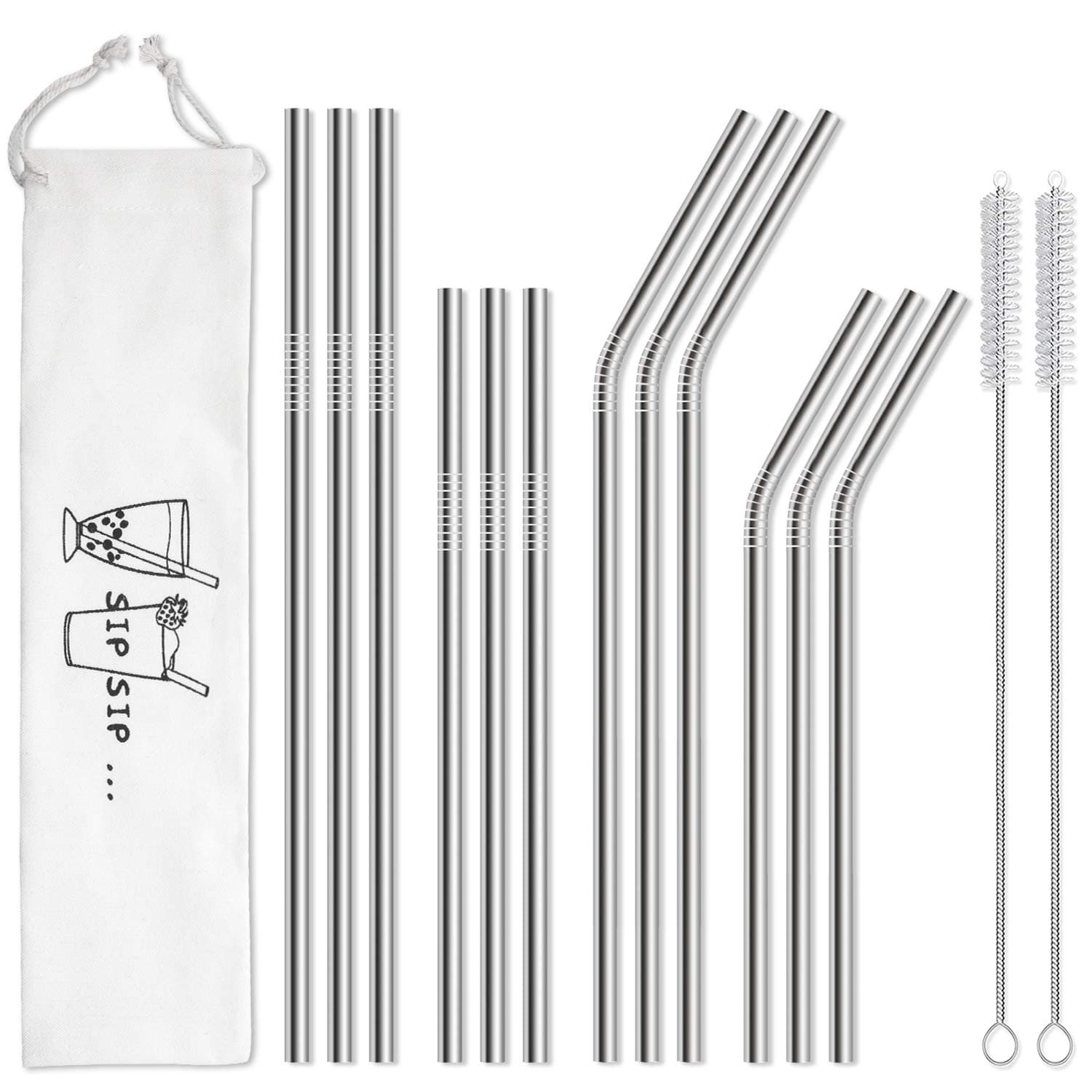
This is genuinely one of the easier swaps in the sustainability world because it also happens to save you money. A set of stainless steel straws, something like the Hiware 12-Pack with the cleaning brushes and travel case, costs less than a fancy coffee and will outlast every paper straw you'd have gone through in the next several years combined. Toss two in your bag or car cupholder and you're covered for iced coffee, smoothies, and the kids' juice boxes without buying another disposable straw or wondering what's in the coating.
The actual takeaway here
The lesson isn't that paper straws are secretly evil or that you ruined the planet by using one at a restaurant last week. It's that "plant-based" and "eco-friendly" get slapped on packaging a lot faster than the actual research catches up, and sometimes the fix for one problem quietly creates another. If you want a straw that's genuinely done thinking about its environmental impact, skip the paper and the bamboo, grab a stainless steel one, and just keep it in your bag. It's the rare sustainability move that's cheaper, simpler, and actually holds up to scrutiny.
Get the Hiware 12-Pack Reusable Stainless Steel Metal Straws with Case
Ad, affiliate link: we earn a commission when you buy through this link. The price stays the same for you.
Shop on AmazonLiked this? There are 10 more swaps.
The free checklist covers kitchen, bathroom, and shopping. Every swap researched like this one.