Flushable Wipes Are Lying to You: Why "Flushable" Doesn't Mean What You Think
The label says flushable. Your sewer system, and about half a billion dollars a year in repair bills, say otherwise.
I used to feel virtuous buying flushable wipes. Not just clean, but responsible, like I was upgrading from crude toilet paper to some kind of bathroom bidet-in-a-pouch. Then I fell down a research hole about sewer systems and now I look at that little "flushable" label the way I look at "natural flavors." Technically means something. Not the something you assumed.
The tests say no, over and over again
This isn't a vibes-based hunch. When researchers at Toronto Metropolitan University (formerly Ryerson) tested wipes marketed as flushable, the results were bad enough that a sewer inspector who worked on the study described wipes bluntly as something that should never go down a toilet. Separately, New York City's Department of Environmental Protection ran its own test on 28 wipes from major brands using industry flushability guidelines, and not one of them passed. A 2020 study of 101 flushable and non-flushable products found that everything except actual toilet paper failed disintegration testing. That's not one skeptical city or one grudge-holding scientist. That's the pattern, everywhere anyone bothers to check.
"Clears the toilet" and "breaks down in the sewer" are two different jobs
Here's the sleight of hand at the center of the whole flushable wipes debate. Manufacturers can accurately say a wipe clears your toilet bowl, because it does, and that's a much lower bar than surviving a trip through miles of pipe to a treatment plant. As NYC's own sanitation messaging puts it, a flushable label generally just means it clears your bowl, not that it will break down once it's out of sight. Some sewer lines run over ten miles before reaching a treatment facility, and a wipe engineered to hold together in the shower or under a faucet has plenty of time to snag on a pipe joint, twist around a pump impeller, or just sit there intact.
Enter the fatberg, humanity's grossest achievement
When wipes meet grease already clinging to pipe walls, you get a fatberg: a congealed, concrete-hard mass of fat, wipes, and whatever else got flushed that shouldn't have been. London's most infamous specimen weighed in around 130 tons and stretched the length of several city blocks. A 40-ton fatberg in London took three weeks to clear with eight people working nine hours a day. These aren't cute internet stories, they're multi-week excavation projects using water jets, saws, and literal pickaxes.
Somebody's paying for this, and it's you
The National Association of Clean Water Agencies put the annual cost to U.S. utilities at $440 million a year just in operational costs from wipes clogging equipment, a number that gets passed along in your water bill whether or not you personally have ever bought a wipe. New York City alone spends roughly $18.8 million a year degreasing sewers and repairing plant equipment damaged by non-flushable items like wet wipes. Across the pond, UK water companies clear an estimated 300,000 sewer blockages annually at a cost approaching £100 million. Michigan got fed up enough in 2024 that it banned manufacturers from marketing wipes as flushable in the state at all, and Charleston Water Authority actually sued Costco, Walmart, CVS, and several other retailers over the mess.
Okay but I still want to feel clean
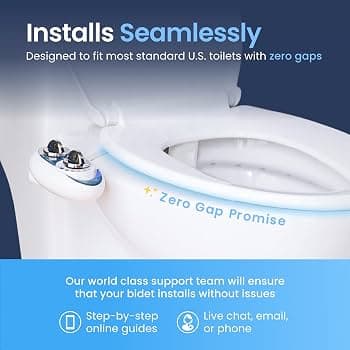
Fair. Nobody's asking you to go back to dry paper if you've gotten used to a wet clean. The honest fix that actually holds up is separating "getting clean" from "using a disposable product at all." A basic bidet attachment does exactly that. Something like the LUXE Bidet NEO 120, a simple, non-electric attachment that fits under your existing toilet seat, gives you the water-based clean that made wipes appealing in the first place, minus the part where a wad of synthetic fiber goes on a multi-mile journey to clog somebody's pump station. Pair it with a small stack of washable cotton flannel squares for drying off, tossed in a wet bag and laundered with your towels, and you've got a system that produces zero flushable-wipe guesswork ever again.
What actually changes for you
Installation takes about twenty minutes with a wrench you probably already own, it doesn't need electricity, and it runs off your existing water line. You stop buying wipes entirely, which quietly saves you real money since a pack every week or two adds up faster than people expect. Your pipes stop being a candidate for the next viral fatberg story. And you're no longer relying on a marketing label to make a promise it was never actually tested to keep.
The bottom line
"Flushable" is a claim about clearing your toilet bowl, not a claim about surviving a sewer system, and every independent test that's checked the difference has found the label wanting. The fix isn't feeling guilty every time you reach for a wipe, it's changing the system so there's no wipe to reach for. A cheap bidet attachment and a stack of cloth squares in the laundry basket does that quietly, permanently, and without you ever having to squint at fine print again.
Get the LUXE Bidet NEO 120
Ad, affiliate link: we earn a commission when you buy through this link. The price stays the same for you.
Shop on AmazonLiked this? There are 10 more swaps.
The free checklist covers kitchen, bathroom, and shopping. Every swap researched like this one.