Bidet Attachments vs Toilet Paper: The Real Cost Math on Switching
A $30-50 bidet attachment sounds like a splurge until you run the toilet paper numbers. Here's the actual payback math.
Let's get the awkward part out of the way: yes, this post is about washing your butt with water instead of paper. No, I'm not going to be weird about it. I'm just going to run the numbers, because it turns out this is one of the rare sustainability swaps where the financial case is almost embarrassingly strong.
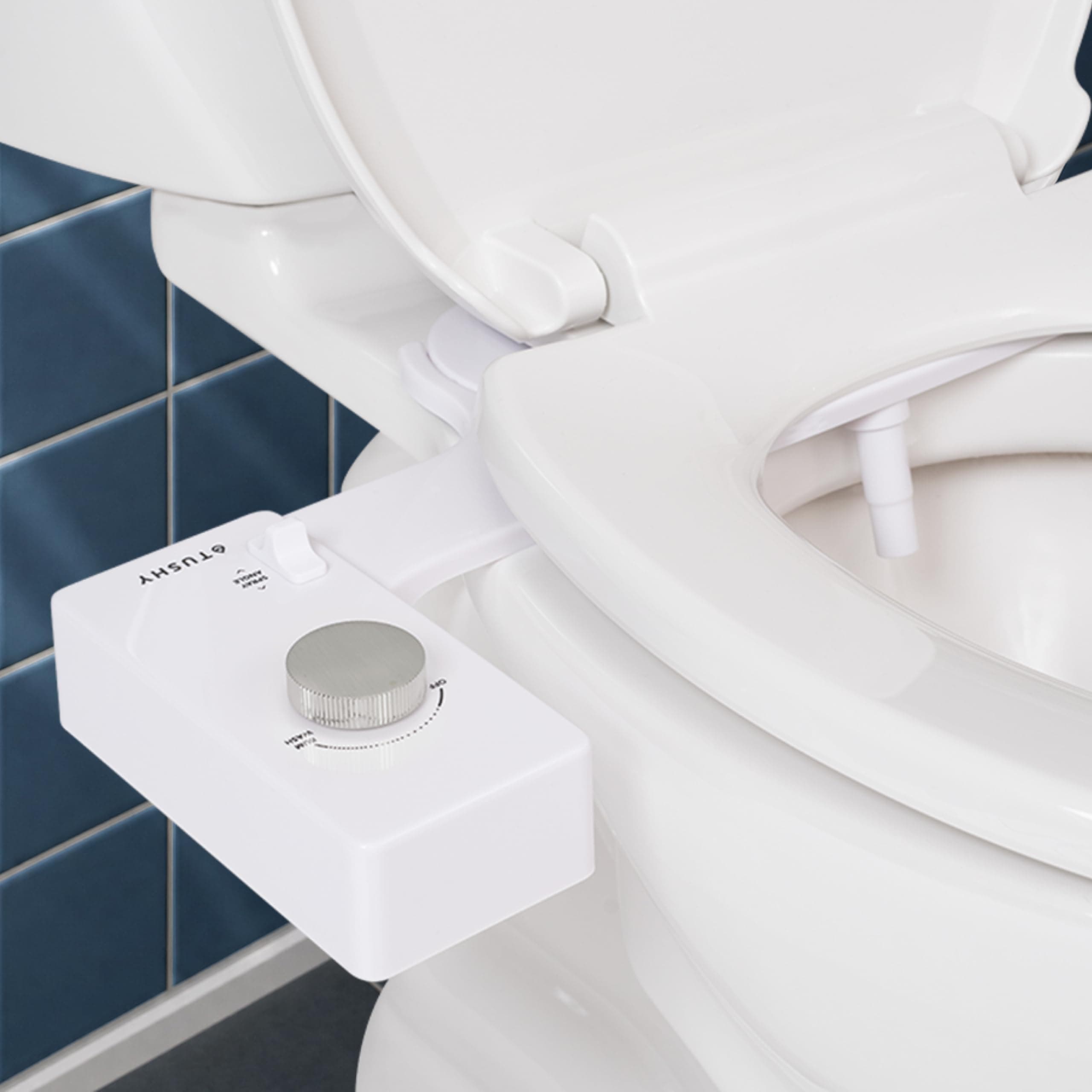
Here's the setup. A basic non-electric bidet attachment, the kind that clips under your existing toilet seat and hooks up to the water line already feeding your toilet, costs somewhere between $30 and $50 for a solid one. No electrician, no plumber. Multiple cost breakdowns from bidet retailers and independent reviewers put installation at under 15 minutes with the tools that come in the box.
So what does toilet paper actually cost you
The average American household spends somewhere in the ballpark of $150 to $300+ a year on toilet paper, depending on family size and whether you're buying the plush stuff or the sandpaper-adjacent value pack. A family of four tends to land toward the higher end of that range. That's not a huge number on its own, which is probably why nobody thinks twice about tossing another pack in the cart. But it's also money that just evaporates every single month, forever, with nothing to show for it.
The bidet math
A bidet attachment doesn't eliminate toilet paper entirely, you still pat dry with a sheet or two. But bidets don't eliminate toilet paper entirely, most people use 1 to 2 sheets to pat dry instead of 5 to 10, which reduces usage by 75 to 80 percent. That's the number that shows up across pretty much every independent breakdown I found, so it's not a marketing exaggeration cooked up by one bidet company.
Run that against a $30 to $50 upfront cost and multiple cost analyses land in the same neighborhood: a non-electric bidet attachment has a payback period of 3 to 4 months for a family of four and 8 to 12 months for a single person. After that, you're just banking savings. One breakdown put it at $150 to $300 saved per year indefinitely once the attachment has paid for itself, and stretched out over a decade that compounds into real money.
Water costs are the part people worry about and then feel silly for worrying about. A bidet uses about 1/8 gallon per use, and even if everyone in your household uses it 6 times a day, you're looking at maybe $1 to 2 per month in water costs. That's not a rounding error that erases your savings, it's a rounding error, period.
Wait, isn't toilet paper itself worse for the planet than I thought?
Kind of, yeah. One estimate puts manufacturing a single roll of toilet paper at using 37 gallons of water, which is wild when you compare it to the fraction of a gallon a bidet uses per rinse. Toilet paper also has to be grown, pulped, bleached, packaged, and trucked to your store before it even gets used once and flushed. A bidet attachment is a single manufactured object that just sits there doing its job for years.
The electric upgrade trap
Here's where I'd tell you to slow down before you get bidet-pilled and buy the fancy one. Electric bidet seats with heated water and warm-air drying run $200 to $800, and the payback period stretches to 2 to 5 years instead of months. That's still eventually a win, but it's a much longer horizon, and if your goal is purely "stop paying for toilet paper," the fancy electric seat is solving a comfort problem, not a money problem. Full smart toilets that integrate a bidet, heated seat, and dryer into a single unit are an even longer game, more of a bathroom-remodel decision than a budget swap.
For the actual cost-math swap, the plain non-electric attachment is the one that pencils out fast. TUSHY's Classic 3.0, one of the more widely reviewed options with nearly 1 million real pooping humans' reviews, is a reasonable example of what that category looks like: no batteries, no outlet, just a water line hookup and a knob you turn to adjust pressure.
The bottom line
If you're trying to save real money on something you buy every single month without fail, a $30 to $50 bidet attachment is one of the fastest-paying-off purchases in the whole sustainability-swap category, usually inside a year even as a single person, and inside a few months for a full household. The electric versions are lovely if you want the spa treatment, but they're a comfort purchase dressed up as a savings purchase. Buy the cheap one first. You can always upgrade your relationship with your toilet later.
Get the TUSHY Classic 3.0 Bidet Toilet Seat Attachment
Ad, affiliate link: we earn a commission when you buy through this link. The price stays the same for you.
Shop on AmazonLiked this? There are 10 more swaps.
The free checklist covers kitchen, bathroom, and shopping. Every swap researched like this one.