Beeswax Wraps vs. Reusable Silicone Bags: Which One Actually Saves You Money?
A real-world cost and use breakdown of beeswax wraps vs. silicone bags, so you can skip the one that'll end up shoved in a drawer.
Every sustainable-kitchen starter pack seems to come with the same two options: a beeswax wrap and a silicone zip bag. Both promise to get plastic wrap and Ziplocs out of your life forever. Both show up in every "20 zero waste swaps" listicle. But they are not interchangeable, and buying the wrong one for your habits is how you end up with a drawer of unused eco-guilt.
I priced both out and looked at what they're actually good at, so you don't have to buy one of each just to find out.
What beeswax wraps actually do well
Beeswax wraps are cloth infused with beeswax, plant oil, and tree resin, and you use the warmth of your hands to mold them around a bowl or a cut avocado. A basic three pack of assorted sizes runs in the same range as a couple of rolls of premium plastic wrap, and one pack can supposedly keep over 1,600 square feet of plastic wrap out of landfills each year, enough to cover a single-family home. That's a marketing number, obviously, but the underlying point holds: you stop buying plastic wrap rolls.
The catch is durability and use case. Wraps are breathable, which is genuinely great for cheese and bread since it lets them stay fresh without sweating, and you can even use one as a cover during dough proofing or a no-slip surface for kneading. But they're not sealed. You can't dunk a wrap-wrapped bowl of soup on its side in the fridge, and you can't put one in the dishwasher or microwave. Most brands say a wrap is good for about a year of regular use before it loses its stick, and after that it can be composted or used as a fire starter instead of going to a landfill.
What silicone bags actually do well
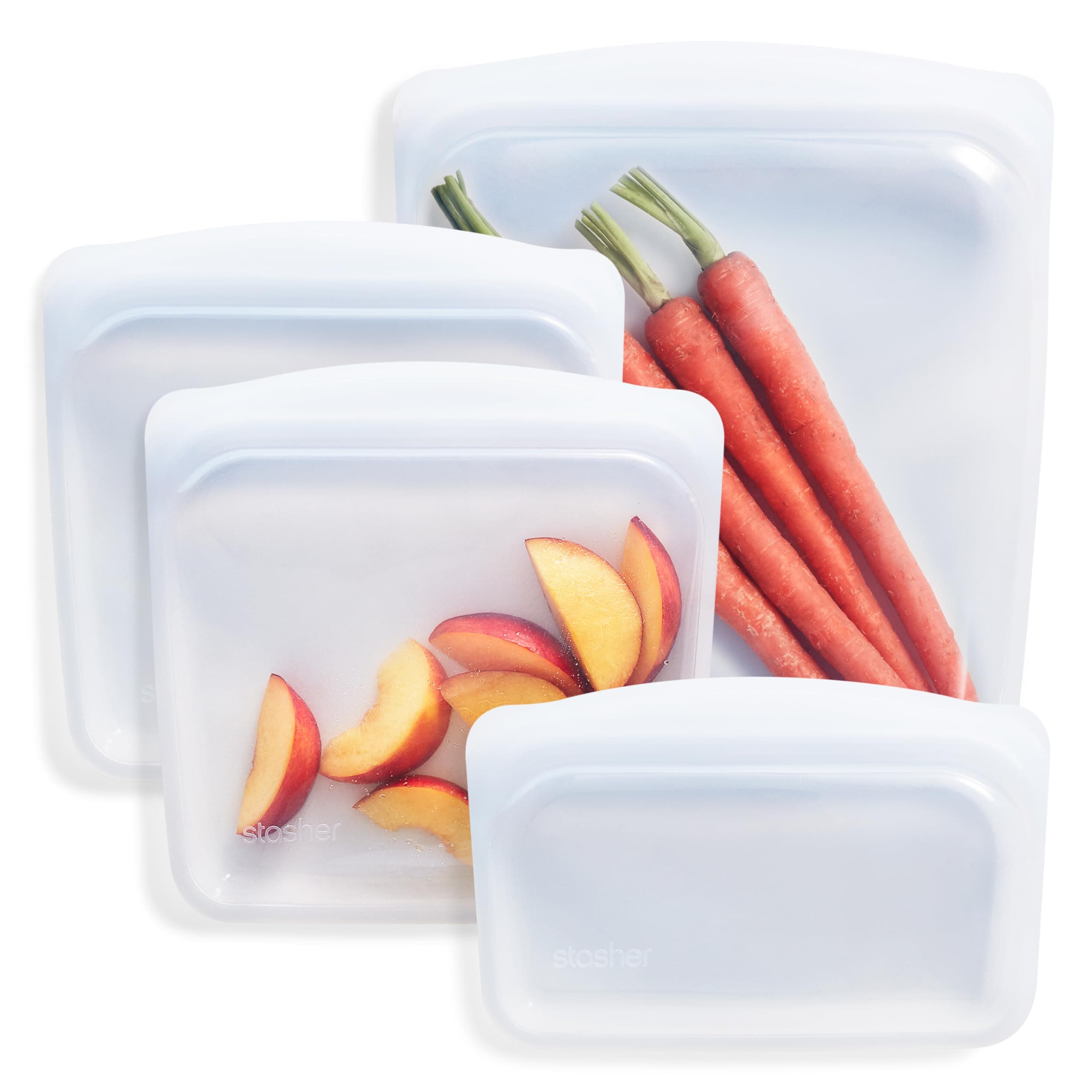
Stasher bags and similar silicone bags are the other end of the spectrum: a fully sealed, dishwasher and freezer safe pouch that acts like a real Ziploc replacement. They're pricier upfront, a basic sandwich-size bag lists for around $12 to $13 individually, more like $30 to $40 for a starter multi-pack, but they're built for the long haul. They're designed to be reused forever, and are covered by a lifetime warranty. That warranty matters because it changes the math from "durable-ish product" to "buy once."
They're also more versatile in temperature range. They're safe for the freezer, dishwasher, stovetop, microwave, and oven up to 425°F, so you can go from freezing soup to reheating it in the same bag, something a beeswax wrap simply cannot do. The tradeoff is that silicone doesn't breathe, so bread goes stale faster inside one, and they can feel bulky compared to a flat wrap when you're trying to save drawer space.
The actual cost comparison
If you're replacing a roll of plastic wrap that costs maybe $4 to $5 and lasts a couple months, a $16 to $20 three-pack of beeswax wraps pays for itself in under a year if you're diligent about washing and reusing them, faster if you were buying the fancier "cling and seal tight" plastic wraps.
Silicone bags take longer to break even against sandwich bags, which are cheap per unit, but the math flips once you account for how many boxes of sandwich bags a family goes through in a year. A $30 starter pack that genuinely lasts five-plus years, and owners who've used them for years report the seal holds up without wearing out, works out to just a few dollars a year once it's paid for itself.
So which one should you actually buy
If most of your plastic waste is wrapping cheese, half an onion, or a bowl of leftovers that'll get eaten within a day or two, start with beeswax wraps. They're cheaper to try, and if you hate the tackiness or the hand-washing routine, you're not out much money.
If your plastic waste is mostly sandwich bags, freezer bags, or anything that needs an actual seal, marinating meat, packing soup for lunch, freezing berries, skip straight to silicone. It costs more on day one but it's doing a job wraps genuinely cannot do, and the lifetime warranty means you're not rebuying it in a year.
The bottom line
Don't buy both at once thinking you need a "complete kit." Look at what's actually going in your trash the most this month, plastic wrap or plastic bags, and buy the one product that replaces that specific habit. You can always add the other later once you know it'll actually get used.
Get the Stasher Bag Leakproof Dishwasher Safe Eco friendly
Ad, affiliate link: we earn a commission when you buy through this link. The price stays the same for you.
Shop on AmazonLiked this? There are 10 more swaps.
The free checklist covers kitchen, bathroom, and shopping. Every swap researched like this one.